
- All
- Product Name
- Product Keyword
- Product Model
- Product Summary
- Product Description
- Multi Field Search
Views: 0 Author: Site Editor Publish Time: 2026-06-02 Origin: Site


End-of-line packaging is historically the most labor-intensive bottleneck in manufacturing. It remains highly prone to ergonomic injuries and severe staffing shortages. Operators face immense physical strain lifting heavy boxes every shift. Facility managers struggle to maintain consistent throughput metrics.
While automated palletizing is not new, technological leaps changed the landscape completely. The integration of advanced vacuum grippers and sophisticated palletizing software shifted the paradigm. This automation transitioned from a rigid, highly engineered project to a flexible, deployable asset. You can now adapt quickly to unexpected packaging changes. Production lines no longer require extensive downtime for mechanical tool adjustments.
This guide breaks down the technical realities, implementation risks, and evaluation criteria for adopting a vacuum-equipped system. We explore hardware selection, environmental constraints, and intelligent software capabilities. You will learn how to determine if this automation aligns seamlessly with your production throughput and long-term ROI requirements.
Upstream Compatibility: Vacuum palletizers seamlessly integrate with automated upstream systems, from a standard case erector machine to specialized workflows like a sausage production line.
Hardware Realities: Not all vacuum grippers are equal; environmental factors (like cold rooms) and packaging types dictate specific material and design choices (e.g., silicone vs. rubber, tubeless airflow).
Software is the Differentiator: Modern palletizing logic prioritizes "store-friendly" reverse-sequencing and dynamic multi-case picking over raw mechanical speed.
Verified ROI: Most properly scoped standardized palletizing cells achieve full payback within 12 to 24 months based on two-shift operations.
Vacuum end-of-arm tooling (EOAT) dominates modern automated packaging lines for one main reason. It offers unmatched versatility. Unlike mechanical forks, vacuum systems do not require bottom clearance or large gaps between cases. Unlike magnetic grippers, they handle non-metallic materials effortlessly. You can process corrugated cases, plastic-wrapped bundles, and mixed SKUs simultaneously. The system does not require timely tool changeovers between different batches.
Modern vacuum grippers evolved significantly from earlier iterations. Industry leaders now utilize "sandwich construction" or tubeless vacuum heads. Engineers route the compressed air internally through solid structural plates. This brilliant design eliminates fragile external hoses entirely. External hoses bend constantly, wear out quickly, and snag on passing equipment. Internal routing drastically reduces maintenance downtime. It creates a robust tool capable of running continuously.
However, you must acknowledge distinct physical limitations. Vacuum cups excel at smooth or semi-porous flat surfaces. They struggle immensely when dealing with irregular top surfaces. For instance, bulk bags coming directly from a bag inserting machine present major challenges. The uneven surface causes rapid air leakage. You must use specific modifications, like specialized foam-based grippers, to handle these unpredictable shapes successfully.
Setting realistic throughput expectations prevents costly project failures. Collaborative robots operate safely alongside human workers without safety fences. These agile units typically handle 8 to 13 cases per minute. Industrial setups operate behind secured perimeters. Dual-infeed industrial systems push the limits further. They can reach speeds up to 48 cases per minute. They achieve this velocity using multi-zone EOAT to move entire product layers instantly.
Best Practice: Implement an automatic blow-off cycle. A quick burst of positive air pressure releases the box instantly, shortening cycle times.
Common Mistake: Ignoring dust accumulation. Corrugated dust clogs vacuum filters rapidly. Neglecting filter maintenance drops suction power and drops boxes.
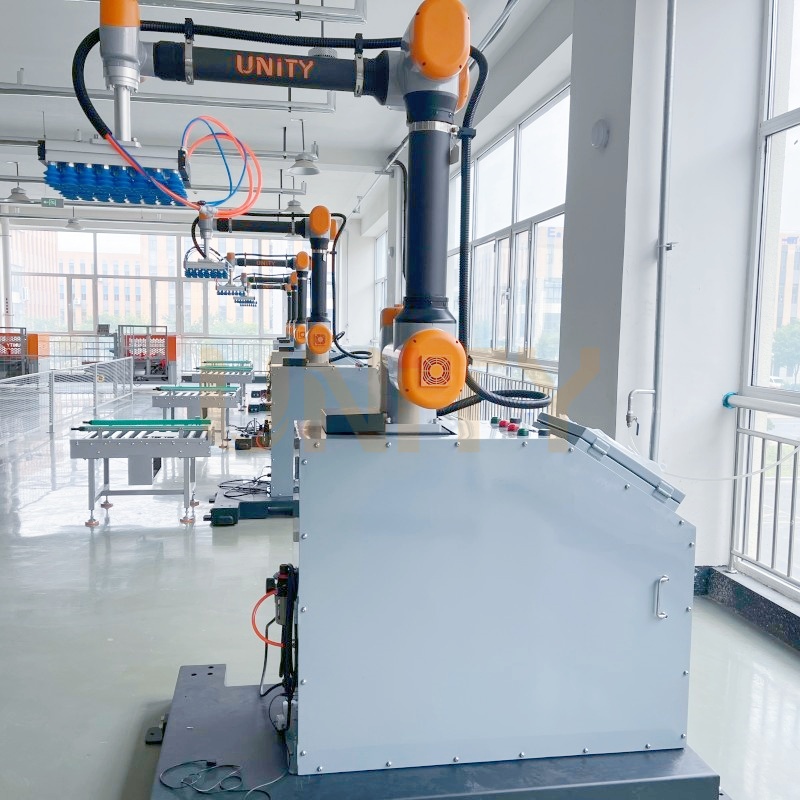
Understanding the exact sequence of operations reveals the true complexity of automated packaging. A properly integrated system functions as a continuous, unbroken rhythm. We can walk through a highly realistic cycle to demonstrate core implementation knowledge.
Infeed Accumulation: Products arrive constantly from various upstream processing stations. The pace depends entirely on your specific production line. Items might be delicate fresh produce sorted carefully by a strawberry calyx remover. Conversely, they might be heavy boxed goods ready for distribution. The conveyor accumulates these items into predictable queues.
Preparation & Vision: Cases gather in a designated buffer zone. Integrated vision systems scan every single box thoroughly. Cameras confirm precise package orientation. Sensors inspect structural quality before the gripping sequence begins. The system rejects damaged boxes automatically.
Multi-Case Picking: The palletizing robot moves smoothly into position over the buffer zone. A multi-zone vacuum gripper activates its suction circuits. It picks an entire row of four cases simultaneously. This crucial multi-pick logic optimizes cycle times dramatically.
Interlayer Placement: Load stability matters immensely during long transit routes. The exact same vacuum tool picks up slip sheets. It places protective tier sheets between stacked rows seamlessly. Modern grippers utilize secondary suction cups specifically engineered for handling thin porous cardboard.
Discharge & Safety: The completed pallet indexes out automatically via heavy-duty conveyors. Modern facilities utilize advanced safety muting logic. This safety protocol complies strictly with ANSI/RIA R15.08 standards. Finished pallets pass safely through optical light curtains. The robot continues working efficiently without triggering a complete system shutdown.
The mechanical hardware lifts the heavy boxes. However, the software logic dictates the overall operational efficiency. You should frame software benefits based on specific user roles. This approach highlights true value and avoids meaningless feature-dumping.
For Operators: Floor operators need intuitive simplicity. Recipe-driven Human-Machine Interfaces (HMIs) provide exactly this. Operators switch between known SKUs quickly and confidently. They require absolutely zero coding knowledge. They simply tap a visual screen icon and resume full production instantly.
For Technicians: Facility downtime costs serious money. Offline simulation tools save countless engineering hours. Technicians map out new box dimensions virtually on laptops. They create complex interlocking stack patterns offline. Production continues entirely uninterrupted while they test these new configurations safely.
For Facility Management: Factory management relies entirely on data. Modern software integrates directly into Warehouse Management Systems (WMS). Upstream packaging equipment shares critical throughput data instantly. Managers gain real-time visibility into production bottlenecks and overall equipment effectiveness.
Advanced WMS logic goes far beyond calculating basic load stability. Heavy items naturally sit on the bottom layer. Fragile items rest securely on the top layer. However, intelligent software now implements "store-friendly" stacking protocols. The WMS tells the robotic controller the final retail destination layout. The robot packs the pallet in the exact reverse order of the retail unpacking sequence. A retail worker unloads the pallet directly into the correct aisle without sorting. This reverse-sequencing reduces downstream labor costs significantly.
Best Practice: Always lock HMI editing access. Give operators "select-only" permissions to prevent accidental recipe alterations during late shifts.
Common Mistake: Relying solely on default stacking algorithms. Failing to manually tweak the interlocking patterns often results in unstable corner columns.
Standard out-of-the-box automation systems sometimes fail spectacularly in harsh real-world conditions. You must address specific environmental constraints early in the planning phase. Proactive risk mitigation guarantees long-term operational success.
Temperature affects pneumatic components severely. Standard rubber vacuum cups fail routinely in 1.7°C (35°F) facilities. The cold ambient air causes the rubber to become stiff and brittle. The cups lose their pliable sealing edge. Heavy boxes drop and shatter on the concrete floor. You must recommend temperature-tested silicone cups for any refrigerated food or beverage application. Silicone maintains exceptional flexibility in near-freezing temperatures.
You must carefully balance payload capacity and mechanical speed. Maximum payload ratings published by manufacturers remain tricky. This rating must account for the heavy weight of the vacuum EOAT itself. A complex multi-zone vacuum plate adds significant mass to the arm. Operating at maximum physical reach accelerates joint wear rapidly. Operating at maximum weight demands much slower cycle times. A heavy payload requires a highly conservative speed profile to prevent motor burnout.
Factory floor space remains incredibly expensive. Many older facilities simply cannot expand their square footage. Compact solutions solve severe footprint constraints effectively. Engineers design dual-robot shared zones to save space. These cells utilize central pop-up conveyors. Two separate robot arms share one central discharge lane efficiently. This clever layout maximizes product output per square foot.
Vacuum Material Selection Guide | |||
Material Type | Ideal Environment | Temperature Range | Durability & Wear Resistance |
|---|---|---|---|
Standard Nitrile Rubber | Ambient Warehouse | 15°C to 40°C | High resistance to oil and friction. |
Silicone | Cold Rooms / Freezers | -30°C to 10°C | Maintains flexibility in deep cold; tears easily if snagged. |
Polyurethane (PUR) | High-Speed Abrasive Lines | 10°C to 50°C | Exceptional wear resistance; outlasts rubber 3-to-1. |
Evaluating financial returns requires a structured, logical framework. Moving from casual research to vendor shortlisting demands hard data. You must analyze both technical feasibility and financial impact comprehensively.
Never purchase hardware without demanding a comprehensive 3D simulation first. Use your exact factory floor layout files. Input your exact heaviest and lightest case dimensions. Virtual testing reveals subtle bottleneck risks immediately. It shows precise robot reach limitations before you pour concrete.
Next, evaluate standardization versus customization. Many facilities benefit from a pre-assembled "Robot-in-a-Box" solution. These standardized cells offer fast deployment and plug-and-play simplicity. You drop them into place and start running. Conversely, high-speed varied lines require custom modular integration. Complex upstream feeds, like a case erector machine tied directly into a high-speed sorter, demand a tailored approach.
Calculate your financial return far beyond simple displaced headcount. An accurate ROI model includes several hidden cost savings. You must factor in reduced ergonomic worker's compensation claims. Back injuries cost companies millions annually. You must include decreased product damage. Vacuum grippers rarely drop boxes compared to fatigued human workers.
Furthermore, measure the increased truck-space utilization. Software-optimized pallet packing creates incredibly tight, uniform loads. These uniform loads stack higher inside trailer trucks safely. Shipping more product per truck reduces annual freight costs significantly. Most properly scoped automation cells achieve a full financial payback quickly. Expect a standard payback period of one to two years. This timeline assumes continuous or semi-continuous multi-shift operations.
Typical ROI Contributors (Impact Matrix) | ||
Financial Driver | Impact Level | Measurement Metric |
|---|---|---|
Labor Reallocation | High | Hourly wages + benefits across 2-3 shifts |
Ergonomic Claim Reduction | Medium-High | Annual worker comp premiums & lost days |
Product Damage Prevention | Medium | Cost of ruined goods & packaging materials |
Freight Space Optimization | Medium | Fewer trucks needed via tighter pallet stacks |
Summary: A vacuum-equipped robotic system transitions end-of-line packaging dramatically. It changes a rigid bottleneck into a highly scalable asset.
Software Matters: Hardware handles the physical labor, but intelligent software drives actual profitability. Features like store-friendly sequencing create downstream value.
Mitigate Risks Early: Environmental factors dictate hardware success. Silicone cups ensure reliability in cold rooms. Careful payload calculations prevent premature mechanical failures.
Final Recommendation: Long-term success relies less on the specific robotic arm brand. It relies heavily on the correct specification of the vacuum EOAT and seamless upstream equipment integration.
Next Steps: Start your journey with a data-driven assessment. Request a formal throughput simulation using your heaviest, lightest, and most awkwardly shaped cases today.
A: Yes. Advanced multi-zone vacuum grippers handle both materials seamlessly. They adapt without any mechanical tool changeovers. The system manages internal vacuum flow dynamically, closing off inactive suction zones to maintain a strong grip on porous or slick surfaces.
A: No. Most modern vacuum grippers feature integrated secondary suction cups. Engineers design these specifically to pick up thin cardboard or paper slip sheets. The robot places these tier sheets automatically during the normal stacking cycle.
A: Integrated vision systems and vacuum flow sensors detect errors instantly. They recognize a loss of suction or improper box form. This triggers an automatic rejection protocol. The robot moves the damaged box to a reject bin before placing it, ensuring complete stack stability.


