
- All
- Product Name
- Product Keyword
- Product Model
- Product Summary
- Product Description
- Multi Field Search
Views: 0 Author: Site Editor Publish Time: 2026-06-03 Origin: Site


High-volume production environments demand speed, precision, and strict hygiene. Unfortunately, manual bag-in-box and dual-bag nesting processes introduce significant bottlenecks, labor costs, and contamination risks in high-volume production environments. Human operators handling liners often struggle to maintain a consistent pace. They frequently leave loose edges or imperfect folds, which ultimately leads to inconsistent seals and compromised bulk packaging.
Transitioning to a fully automatic bag inserting machine—specifically dual inserting or bag-in-bag systems—standardizes packaging throughput, ensures hermetic seals, and meets strict compliance standards for food, pharmaceutical, and chemical bulk shipping. These advanced automation systems remove human variability from the equation entirely, keeping lines running smoothly without disruption.
The core purpose of this article is to provide technical decision-makers and facility engineers with a vendor-neutral, evidence-based evaluation framework for selecting, integrating, and deploying an automated bag inserter. You will learn how to evaluate mechanical architectures, navigate film compatibility, and seamlessly bridge your new equipment with existing processing lines.
Direct ROI: Replacing manual insertion with automated systems typically reallocates up to 5 workers per shift while stabilizing output at rates up to 400+ bags per hour (or 25–30 cases per minute).
Consumable Strategy is Critical: Machine uptime heavily depends on film choice; continuous tube stock offers dynamic bag sizing and cost reduction, while pre-made rolled bags offer manual-fallback flexibility.
System Integration: A bag inserting machine must seamlessly handshake with upstream case erector machines and downstream automated systems like a palletizing robot.
Risk Mitigation: Because a 1/8-inch tolerance variance can cause catastrophic line jams, mandatory pre-purchase sample testing of corrugated cases and film is an industry standard for risk aversion.
Facility managers evaluate capital equipment based on how quickly it pays for itself. The math behind bagging automation provides one of the clearest paths to immediate financial returns in the packaging sector.
Frame the exact ROI math around labor reallocation. A standard automated system pulling just 6KW of power can easily replace up to 5 manual operators on a busy line. When you multiply those 5 operators across two or three shifts, the savings in variable labor costs become monumental. Furthermore, redirecting these workers to higher-value tasks reduces repetitive strain injuries and associated insurance liabilities. Instead of paying continuous hourly wages for tedious, physically demanding tasks, facilities absorb a single capital expenditure that stabilizes operational budgets for years to come.
Throughput and Labor Shift Summary Chart | |||
Operation Type | Average Output Rate | Labor Required per Shift | Energy Profile |
|---|---|---|---|
Manual Bag-in-Box | 10–15 cases / min | 3–5 operators | Minimal (Human energy) |
Standard Automated Insert | 25–30 cases / min | 0.5 (Monitoring only) | ~4KW to 6KW |
Automated Dual Nesting | 400+ units / hour | 0.5 (Monitoring only) | ~6KW |
You must define realistic production speeds when evaluating equipment. Standard single-layer bag-in-box systems operate rapidly, hitting maximum speeds of up to 25 to 30 cases per minute. However, you should differentiate this from complex bag-in-bag or dual nesting systems. Because these specialized machines execute a complicated double-layer operation—handling an inner and outer liner simultaneously—their output typically hovers around 400+ units per hour. Understanding this distinction prevents unrealistic production forecasting.
Automation directly addresses the human element on the factory floor. High-end systems feature user-centric designs intended to reduce operator fatigue and minimize turnover. Look for features such as dual-sided Human-Machine Interface (HMI) panels that allow workers to control the machine from either side of the conveyor. Automated film loading mechanisms prevent workers from wrestling with heavy rolls of polyethylene, vastly improving workplace ergonomics.
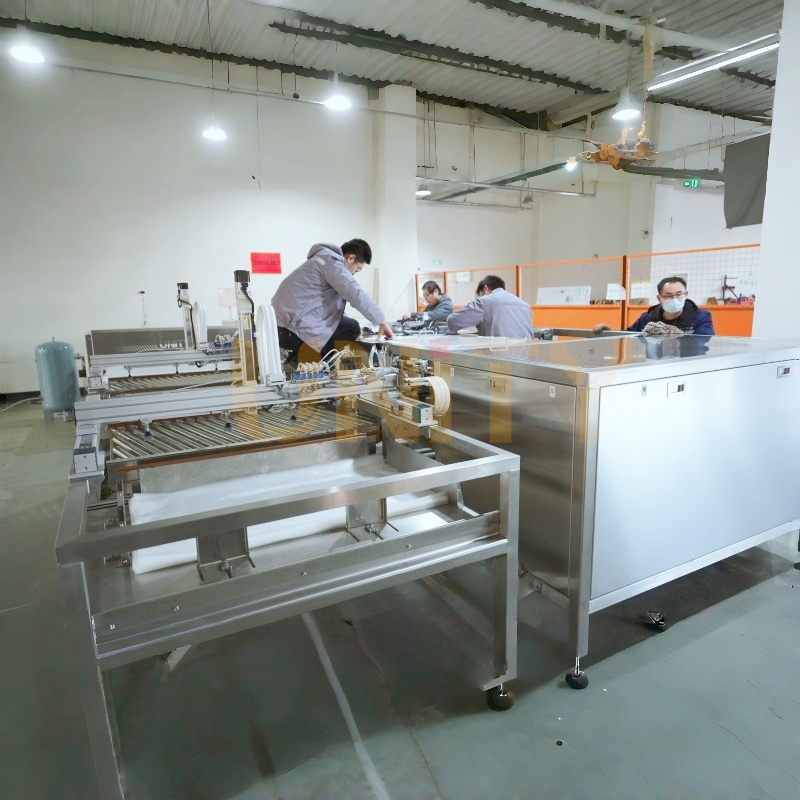
To make an informed purchasing decision, engineers must look beneath the sheet metal. The methods machines use to open and place films dictate their reliability in specific environments.
The ongoing engineering debate usually centers on how the machine grasps the film. Each architecture serves a specific purpose.
Opposing Vacuum Plenums: This design relies heavily on suction. The machine uses opposing vacuum cups to grip the sides of the flat bag, pulling outward to reverse-stretch it open. It remains the ideal choice for high-speed applications using standard, lightweight PE films.
Mechanical Grippers: Mechanical jaws physically pinch and pull the bag open. This method is preferred for heavy-duty applications or complex dual-bag scenarios where vacuum suction might fail. Grippers prevent "dropped bags" and can actually reduce total film usage by up to 7% because they require less excess material to establish a firm hold.
A high-quality machine executes a precise, automated action chain. First, the unit dispenses the exact length of film required. Second, it cuts the material. Third, impulse sealers weld the bottom shut. Finally, the machine inserts the finished bag into the receptacle. Crucially, sophisticated cuffing fingers descend into the box, mechanically securing the bag over the corrugated flaps. This ensures the bag stays wide open for clean, unobstructed downstream filling.
Standard corrugated boxes are common, but they are not the only containers used in bulk processing. Modern systems offer capabilities well beyond the standard cardboard box. By integrating specialized air plunger systems, high-end machines can flawlessly push liners into large octagonal bins (Octabins), steel drums, or rigid clamshell crates. The air plunger forces the plastic deep into the corners of the receptacle, eliminating air pockets that could burst during product filling.
No machine operates in isolation. The success of your bagging operation relies entirely on how well it communicates with the equipment preceding and following it on the line.
You can map out exactly where the bag inserter fits into your broader strategy. Automation typically scales upward in complexity. It starts at a basic level with simple, standalone bag-placing modules. As maturity increases, facilities integrate multi-scale hoppers. Finally, they arrive at fully integrated, data-connected lines where PLCs communicate across the entire factory floor.
Your inserter acts as a central hub between packaging logic and processing logic.
Packaging Logic: The inserter heavily depends on the preceding station. It must receive perfectly squared, structurally sound boxes directly from the case erector machine. If a box arrives skewed, the inserter's descending fingers will crash into the cardboard, causing immediate faults.
Processing Logic: Integration requires seamless bulk-feed handoffs. Whether your line is receiving sanitized, delicate fruit from a strawberry calyx remover or bulk processed meat chunks from a heavy-duty sausage production line, the inserter must pace itself accurately. It must absorb volatile upstream outputs without causing back-ups or product spillage.
Once filled, the process is far from over. You must explain the necessity of tight, secure closures before the container moves further. Depending on the product, you might utilize heat seals, industrial glue, or pinch-top closures. Securing the bag properly ensures zero leakage. Only then should you pass the finalized bulk boxes to the end-of-line palletizing robot. A poorly sealed bag shifting inside its box will create an unstable center of gravity, causing the palletizing robot to build a dangerous, leaning stack.
The physical machine represents only half the equation. The consumable film you push through it dictates your overall uptime and material expense.
Tubular film comes as a continuous, unsealed sleeve of plastic.
Mechanism: The machine utilizes dynamic impulse sealing jaws and a guillotine knife to cut and seal bags on the fly directly from the continuous tube.
Advantage: This method allows for on-the-fly, random box height adjustments. Because you create the bag precisely to the dimension needed, it significantly lowers overall consumable costs over the fiscal year.
These rolls feature bags already formed, sealed, and separated by perforations.
Mechanism: The film supplier pre-perforates and pre-seals the bottom of every bag. The machine merely indexes the roll, tears the perforation, opens the bag, and inserts it.
Advantage: Pre-made rolls are remarkably easier to troubleshoot. Furthermore, if the machine experiences unexpected downtime, workers can easily pull bags off the roll and manually insert them, providing a crucial operational fallback.
We advise buyers to audit films based on strict material science metrics, especially for food and pharmaceutical applications requiring high-barrier or aluminum-coated films. Key variables include:
Dart (Impact Resistance): Measures how much force a falling mass requires to puncture the film. Crucial for facilities dropping heavy or sharp frozen goods into the bag.
Elongation: The percentage a film can stretch before tearing. High elongation prevents bag failures when filling large, irregular loads.
Oxygen Transmission Rate (OTR): Measures the amount of oxygen gas passing through the film over a given period. Low OTR is mandatory for preventing oxidation in sensitive food products.
Many equipment purchases look perfect on paper but fail spectacularly on the production floor. Taking a proactive engineering approach mitigates these disasters.
We must address the hard truth of packaging automation. Industry data suggests that over 60% of automation projects face significant initial hurdles due to untested variables. Common culprits include heavy corrugated dust fouling optical sensors, static electricity buildup causing films to cling to machine walls, and inconsistent film thickness from secondary suppliers.
Never assume standard machine specs perfectly match your unique environment. Buying equipment without sending your exact consumable materials to the vendor for a test run is the single biggest cause of deployment delays.
An automated bag inserting machine is highly sensitive to dimensional deviations. The mechanics require pinpoint accuracy. Even a minor 1/8-inch variance in box dimensions or film width can cause chronic faults, misaligned cuffs, or shattered vacuum suction. Engineers must establish strict quality control guidelines with corrugated box suppliers to ensure exact sizing batch after batch.
You cannot ignore the factory environment. Detail the necessity of integrated anti-static bars. When plastic film unrolls at high speeds, it generates immense static electricity, acting like glue against the machine's metal chassis. Anti-static bars neutralize this charge. Furthermore, HVAC and temperature-control modules are absolute requirements for facilities dealing with frozen foods or extreme heat, as temperature fluctuations drastically alter film elasticity.
When you are ready to evaluate manufacturers, look beyond basic output speeds. Use a structured decision framework to separate capable partners from simple fabricators.
Look for systems offering PackML compliance. This standard ensures seamless electronic control, uniform operator interfaces, and clear out-of-tolerance alerts. True connectivity means the machine integrates flawlessly into existing plant networks via Ethernet cascading, allowing managers to pull real-time diagnostic data remotely.
Production lines rarely run the same product forever. Use changeover time as a standard metric for evaluation. Ask the vendor: Can a single operator execute a format changeover—switching from a small box to a large box—in under 20 minutes? High-end machines achieve this by utilizing toolless adjustments and clear, step-by-step graphical guides displayed directly on the HMI.
Environmental, Social, and Governance (ESG) requirements are changing the packaging landscape. Evaluate whether the machine architecture supports a future transition from traditional plastic PE films to curbside-recyclable paper bags. Systems capable of "hybrid bagging" protect your initial investment against future regulatory bans on single-use plastics.
A fully automatic bag-in-bag inserting machine is far from a simple plug-and-play appliance. It acts as a highly engineered integration point that demands precise material matching and robust upstream and downstream handoffs. Success requires aligning your facility's environmental realities with the machine's mechanical capabilities.
For your next steps, do not rely on sales brochures or spec sheets alone. You should shortlist two to three reputable vendors and mandate a Factory Acceptance Test (FAT). Require them to run your exact corrugated boxes and film samples on their floor. Validating throughput, testing tolerance limits, and proving low jam-rates during a FAT guarantees your investment performs the moment it hits your production line.
A: A standard dual machine usually operates around 6KW. It typically requires a 380V/50Hz power supply and relies heavily on compressed air inputs, commonly demanding around 8m³/min at 0.7mpa to operate pneumatic cylinders and suction plenums effectively.
A: Yes, specialized dual bag inserters (often called nesting systems) are specifically designed to grip, open, and nest two layers concurrently. These are heavily utilized in medical, pharmaceutical, and hazardous chemical packaging where double-barrier protection is mandatory.
A: High-quality inserters feature advanced optical sensors configured to detect out-of-spec box dimensions before insertion begins. If a deformed box enters the zone, it triggers an automatic bypass or an out-of-tolerance alert to prevent mechanical fingers from crashing and jamming the line.
A: Standard single-layer machines may ship in as little as 3–10 days if they are in stock. However, custom bag-in-bag systems or units requiring specific complex line integrations typically require a much longer 13–15 week lead time for engineering and testing.


