
- All
- Product Name
- Product Keyword
- Product Model
- Product Summary
- Product Description
- Multi Field Search
Views: 0 Author: Site Editor Publish Time: 2026-06-04 Origin: Site


The transition from semi-automated meat processing to a fully automatic sausage production line represents a critical leap forward for food manufacturers. Facilities face growing demands to maximize yield and standardize product consistency across every batch. Shrinking profit margins also make minimizing labor-intensive bottlenecks an absolute necessity for modern plant survival.
Commercial hot dog and sausage manufacturing often suffers from hidden margin erosion. You might notice inaccurate portioning, frequent casing blowouts, and excessive downtime required for sanitation. These daily inefficiencies severely impact overall plant profitability and limit your ability to reliably scale production to meet market demands.
Implementing an enterprise-grade hot dog processing machine directly resolves these challenging variables. However, success requires strict alignment between the system’s capacity, material grade, and your facility's operational throughput. We will explore how to perfectly match an automated solution to your compliance protocols, daily production goals, and floor space constraints.
Capacity vs. Reality: A fully automatic line must be evaluated on continuous throughput (kg/hr) minus average daily sanitation downtime, not just theoretical maximums.
Process Integration: The highest ROI comes from seamless integration between stuffing, linking, and downstream packaging automation.
Compliance & E-E-A-T: Equipment utilizing IP69K-rated washdown components and 304/316 stainless steel is non-negotiable for strict USDA/FDA or global food safety compliance.
Vendor Consolidation: Standardizing automated systems across a facility reduces total cost of ownership (TCO) and operator training time.
Managers often struggle to pinpoint the exact moment a facility outgrows its semi-automatic processing equipment. Recognizing production ceilings early prevents lost revenue and protects brand reputation. You must look for specific failure indicators on your current floor.
Here are three primary indicators you have hit a production ceiling:
Inconsistent Link Lengths: Your current twist-linkers drift off calibration, resulting in sausages varying by several millimeters.
High Casing Waste: Operators experience frequent blowouts during stuffing, ruining expensive natural or artificial casings.
Severe Operator Fatigue: Manual twisting and hanging lead to ergonomic injuries and inconsistent processing speeds toward the end of a shift.
Transitioning to an automated system allows for intelligent labor reallocation. Hand-stuffing and manual twisting offer very low value per labor hour. By automating these steps, you can shift staff to higher-value roles. They can manage quality control, optimize facility logistics, and perform preventative maintenance.
Yield optimization remains the most compelling reason to upgrade. Modern vacuum filling removes trapped air pockets in the meat emulsion. Servo-driven twisting mechanisms measure portions down to the gram. This precision aggressively reduces give-away margins. When you process thousands of kilograms daily, saving just two grams per sausage equates to massive annual savings.
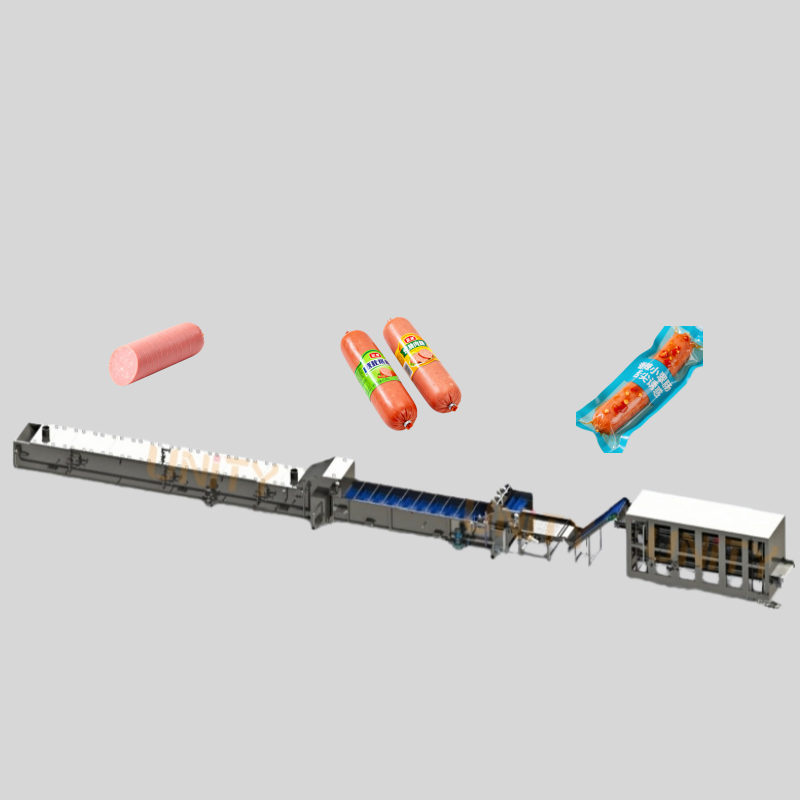
Understanding the internal mechanics of your processing equipment helps you make better purchasing decisions. The architecture dictates product quality, maintenance schedules, and casing compatibility.
The vacuum stuffer acts as the heart of the operation. You typically choose between dual-screw or rotary vane pumps. Rotary vane pumps excel at maintaining continuous, smear-free emulsion flow for finely chopped hot dog mixtures. They prevent the mechanical friction causing fat to separate from protein. This separation, known as "smearing," creates unappealing visual defects and ruins the texture of the final product.
Linking modules divide the continuous meat extrusion into individual sausages. Enterprise machines utilize advanced servo-driven motors to guarantee exact length accuracy. However, casing compatibility remains a major consideration. Different casings require varying tension settings and specialized linking nozzles.
Casing Type | Tension Requirement | Best Application | Common Processing Challenges |
|---|---|---|---|
Natural (Hog/Sheep) | Low / Adaptive | Premium sausages, brats | Inconsistent caliber sizes; prone to blowouts. |
Collagen | Medium | Breakfast links, snack sticks | Requires precise moisture control during stuffing. |
Cellulose | High / Rigid | Skinless hot dogs | Must be mechanically peeled after smoking/cooking. |
Manual transfer from the linker to the smokehouse cart introduces contamination risks and slows production. Automated casing hangers solve this problem. They gently loop exact portions of sausages onto smoke sticks. These sticks then feed directly into continuous smoking or cooking systems. This completely eliminates manual handling of the raw product.
Enterprise food manufacturing demands uncompromising material standards. Construction must utilize 304 or 316 food-grade stainless steel. Furthermore, manufacturers must employ crevice-free continuous welding. Pitted metals or bolted joints create pathogen harbor points where Listeria and Salmonella thrive. Smooth, sloped surfaces ensure water drains away rapidly during washdown.
You must evaluate potential equipment based on how engineering features translate into daily operational outcomes. Flashy technology matters very little if it fails to improve your plant's core metrics.
Matching hopper capacity and extrusion speeds to your downstream infrastructure is critical. A stuffer pushing 3,000 kilograms per hour provides zero benefit if your smoking and chilling infrastructure only handles 1,500 kilograms. You must audit your thermal processing capacity before sizing your extrusion machinery. A bottleneck at the smokehouse forces the entire line to stop.
Agile food plants run multiple SKUs daily. You must assess the time required to switch horns, linking nozzles, and software parameters between different sausage calibers. Industry best practices rely on toolless disassembly. Operators should hand-loosen sanitary clamps rather than using wrenches. Fast changeovers directly increase daily active production time.
Centralized recipe management ensures batch-to-batch consistency. A robust Programmable Logic Controller (PLC) combined with an intuitive Human-Machine Interface (HMI) locks down processing variables. Operators simply select "Recipe 4: Beef Frankfurters." The system automatically adjusts vacuum pressure, twist counts, and linking speed. This eliminates human guesswork and standardizes product quality regardless of who runs the shift.
Meat processing environments face brutal cleaning regimens. You must verify IP69K ratings for all exposed electronics, sensors, and servo motors. An IP69K rating guarantees the components withstand high-pressure, high-temperature chemical washdowns. Equipment lacking this rating will suffer frequent electrical shorts, leading to catastrophic unplanned downtime.
Producing hot dogs efficiently only solves half the equation. You introduce severe operational risks if you produce meat faster than your packaging line handles it. A synchronized end-of-line system preserves your initial processing investments.
Bridging production and packaging requires buffer zones. Accumulation tables temporarily hold finished, chilled hot dogs if the thermoforming packaging machine encounters a minor jam. This prevents you from stopping the upstream extrusion process.
Preparing bulk packaging for high-volume foodservice or retail distribution demands industrial automation. After the sausages enter primary vacuum packages, they move to secondary boxing. A highly efficient case erector machine builds the outer corrugated boxes at speeds matching your line output. Next, an automated bag inserting machine perfectly lines these bulk cartons with poly-film to preserve freshness and prevent freezer burn.
Finally, finished cases reach the logistics phase. Operators historically suffered back injuries from stacking heavy boxes of frozen meat. Utilizing a palletizing robot at the end of the line completely eliminates this heavy lifting. These robots stabilize pallet loads precisely and streamline the rapid transition of pallets into cold storage.
Deploying automated machinery involves facility-wide planning. Overlooking utility prerequisites or cross-departmental synergies often derails deployment timelines.
Enterprise food manufacturers frequently manage highly diverse operations under one roof. You might run a heavy meat processing line in one wing of your facility. Simultaneously, you might operate fresh produce automation—such as a precision strawberry calyx remover—in an entirely different sector. Standardizing your PLC interfaces, HMI screens, and vendor maintenance contracts across all departments significantly reduces engineering overhead. Maintenance teams learn one software logic and apply it everywhere.
Assess your utilities long before finalizing equipment placement. Industrial hot dog lines demand robust infrastructure.
Electrical: Clean, dedicated three-phase power (often 480V) to drive large vacuum pumps and servos.
Pneumatic: Dry, filtered compressed air (typically 90 PSI minimum) for pneumatic cutting cylinders.
Water: Accessible chilled water lines for hopper cooling jackets, preventing emulsion breakdown.
Drainage: High-capacity trench drains located directly under the equipment footprint for washdown runoff.
Never sign off on equipment delivery without completing a Factory Acceptance Test (FAT). Running a dry machine proves nothing. You must mandate a wet test using your exact meat emulsion and your specific casing type at the vendor’s facility. This reveals flow issues, smearing tendencies, and linking errors before the machine ever reaches your plant floor.
Securing the right processing equipment goes far beyond comparing initial capital expenses. You must calculate ongoing operational realities and thoroughly vet the manufacturer's long-term support infrastructure.
Smart buyers look past the sticker price. You need to identify recurring maintenance costs before committing. Ask vendors about the lifespan of proprietary replacement parts like vacuum pump vanes and linking belts. Request transparent pricing on preventative maintenance kits. Machines requiring frequent, expensive wear-part replacements quickly drain operational budgets.
Machine downtime costs thousands of dollars per hour. Evaluate supplier response times and local spare parts availability. Furthermore, prioritize manufacturers offering remote diagnostic telemetry. When a fault occurs, technicians can securely dial into your machine’s PLC remotely, pinpoint a failed sensor, and ship the exact part overnight. This eliminates days of costly diagnostic delays.
Frame your payback period strictly around verifiable metrics. Focus on labor reduction, decreased product giveaway, and increased machine uptime.
Efficiency Metric | Before Automation | After Automation | Estimated Annual Impact |
|---|---|---|---|
Product Giveaway | 3% - 5% variance per link | < 1% variance per link | High raw material savings |
Labor Allocation | 4 operators per line | 1 operator per line | Reallocation to high-value QC roles |
Changeover Time | 45 minutes (tool required) | 15 minutes (toolless) | Additional batch processing daily |
Translate your needs into a formal Request for Proposal (RFP). Demand verifiable yield metrics from competing vendors. Require them to provide customer references from similar-scale facilities running the exact same equipment. Do not accept vague performance promises; demand guaranteed throughput rates based on your specific meat formulas.
An automated hot dog processing line constitutes much more than a simple capital purchase. It represents a fundamental shift in your entire production philosophy. By removing human error, you guarantee product consistency and protect your profit margins from invisible material waste.
Strategic alignment remains the ultimate key to success. You must perfectly match your upstream meat extrusion precision with rigorous downstream packaging solutions. This ensures continuous, uninterrupted flow from raw emulsion straight onto the shipping pallet.
Take action today by auditing your current yield data and casing waste logs. Schedule a consultation with a qualified integration specialist. Together, you can map out a custom line configuration tailored specifically to your facility’s unique footprint and production targets.
A: Modern enterprise lines utilize toolless disassembly and sanitary hygienic design. Daily tear-down and IP69K washdown typically take 45 to 60 minutes. Recipe changeovers between different sausage calibers take roughly 10 to 15 minutes, provided the operators use quick-release linking horns and centralized HMI recipe software.
A: Yes, advanced linking systems handle both. However, operators must switch the linking nozzles and adjust the machine's tension controls. Natural casings require lower tension and adaptive speeds to prevent blowouts, while robust artificial casings (like cellulose) tolerate high-speed, rigid extrusion processing.
A: Vacuum fillers remove oxygen, creating a dense, uniform mixture. They utilize precision-engineered rotary vane pumps or dual-screws offering exceptionally low mechanical friction. Along with hopper cooling jackets that maintain strict temperature control, this low-friction movement prevents fat from melting and separating from the meat proteins.
A: Industrial lines typically require dedicated three-phase power (often 480V) to run heavy vacuum pumps and servo motors. A standard continuous stuffing, linking, and hanging line requires a linear floor space of approximately 6 to 8 meters, not including downstream packaging or smokehouse cart clearance zones.


