
- All
- Product Name
- Product Keyword
- Product Model
- Product Summary
- Product Description
- Multi Field Search
In today’s fast-paced manufacturing and logistics environment, efficiency, accuracy, and speed are no longer optional—they are essential. One of the most critical yet often overlooked stages of the packaging process is box forming. This is where the box erector robot plays a transformative role. A box erector is an automated machine designed to form flat corrugated cardboard blanks into fully opened, squared cases ready for filling and sealing.
As manufacturers seek to reduce labor costs and eliminate bottlenecks, the adoption of robotic automation in packaging has accelerated. A box erector robot not only speeds up carton formation but also ensures consistent structural integrity, helping production lines operate smoothly and predictably. In this article, we will explain what a box erector is, how a box erector robot works, its benefits, key components, applications, and how to choose the right solution for your facility.
A box erector robot is an automated packaging system that takes flat, pre-folded corrugated cartons and transforms them into upright boxes. The machine folds the flaps, squares the case, and seals the bottom using tape or hot melt glue.
Feature | Manual Box Forming | Box Erector Robot |
Speed | Low | High |
Labor Requirement | High | Minimal |
Consistency | Variable | Highly consistent |
Error Rate | Higher | Significantly reduced |
Production Scalability | Limited | Excellent |
Manual carton forming is labor-intensive and inconsistent, especially in high-volume environments. A box erector robot eliminates variability and increases throughput dramatically.
Although different models of a box erector robot may vary in structure and automation level, the fundamental operation process follows a consistent and highly efficient sequence. The purpose of the machine is simple: transform flat carton blanks into fully erected, squared, and sealed boxes ready for product loading—quickly, accurately, and continuously.
Flat carton blanks are loaded into a vertical or horizontal magazine. The robot automatically selects one blank at a time using suction cups or mechanical gripping arms. Advanced vacuum systems ensure precise picking without damaging the corrugated surface. Sensors monitor the carton supply level to prevent interruptions and alert operators when refilling is required.
Once separated from the stack, the blank is pulled into position and mechanically opened into a rectangular shape. This step relies on synchronized movements between suction arms and guiding rails to ensure accurate squaring. Proper box opening is critical because even slight misalignment at this stage can affect sealing strength and downstream packing performance.
After the box is squared, the lower flaps are folded in a controlled sequence. Mechanical guides or pneumatic arms fold the minor flaps first, followed by the major flaps. The precision of this step guarantees structural integrity and prepares the case for secure sealing.
The bottom flaps are sealed using either pressure-sensitive tape or hot melt adhesive. The choice of sealing method depends on production requirements, carton weight, and logistics conditions. Tape sealing offers simplicity and ease of maintenance, while hot melt adhesive provides stronger bonding for heavier products or high-speed operations.
The fully erected and sealed box is transferred onto a conveyor system. It then moves toward a case packer robot or manual loading station. The entire cycle can take just seconds—many modern box erector robots can form dozens of cartons per minute, ensuring smooth synchronization with high-speed packaging lines.
Understanding the core components clarifies how the system delivers reliability, speed, and consistency.
This unit stores flat blanks and feeds them sequentially into the machine. Adjustable magazine designs allow for different carton sizes and quick changeovers.
Vacuum-based suction cups or mechanical grippers ensure accurate carton picking and positioning. This system minimizes misfeeds and improves operational stability.
Mechanical arms, rails, and guides fold flaps precisely to maintain box squareness. Proper geometry is essential for stacking strength and pallet stability.
The sealing system applies tape or hot melt adhesive to secure the bottom flaps. Consistent sealing pressure ensures durability during transportation.
Advanced programmable logic controllers manage timing, alignment, speed control, and diagnostics. Modern box erector robots also integrate smart sensors to detect carton jams, misalignment, or sealing inconsistencies in real time, reducing downtime and improving reliability.
High-speed box erector robots can form dozens of cartons per minute. This ensures packaging lines keep pace with filling, sealing, and palletizing operations without creating bottlenecks. Faster cycle times directly translate to higher throughput and improved profitability.
Automating repetitive carton-forming tasks reduces dependence on manual labor. Manufacturers save on wages, training expenses, and workforce management while reallocating employees to more value-added tasks such as quality control and equipment supervision.
Manual forming can lead to uneven squaring, improper flap alignment, or weak bottom seals. A box erector robot ensures:
Uniform flap folding
Proper sealing pressure
Accurate box geometry
This level of consistency is critical for efficient stacking, palletizing, and transport stability. Uniform cartons reduce product damage and improve supply chain reliability.
Packaging lines often require repetitive bending, lifting, and twisting motions. These tasks increase the risk of musculoskeletal injuries. Automation significantly reduces physical strain on workers and enhances overall workplace safety.
Modern box erector robots are engineered with compact footprints. Their modular designs allow seamless integration into existing production lines without major layout changes. This is particularly beneficial for facilities with limited floor space.
The box erector robot is widely used across industries:
Food and beverage
Pharmaceuticals
Electronics
Consumer goods
Automotive parts
E-commerce fulfillment centers
Anywhere cartons are required at scale, automated erecting improves operational performance.
Criteria | Semi-Automatic | Fully Robotic Box Erector |
Operator Involvement | Required | Minimal |
Speed | Moderate | High |
Automation Level | Partial | Full |
Long-Term ROI | Medium | High |
Scalability | Limited | Excellent |
For growing companies, robotic solutions provide better long-term flexibility and return on investment.
A box erector robot typically works alongside a case packer robot. Together, they form a fully automated packaging line:
Box erector forms cartons
Case packer loads products
Sealer closes top flaps
Palletizer stacks completed cartons
This synchronized system reduces downtime and ensures seamless workflow.
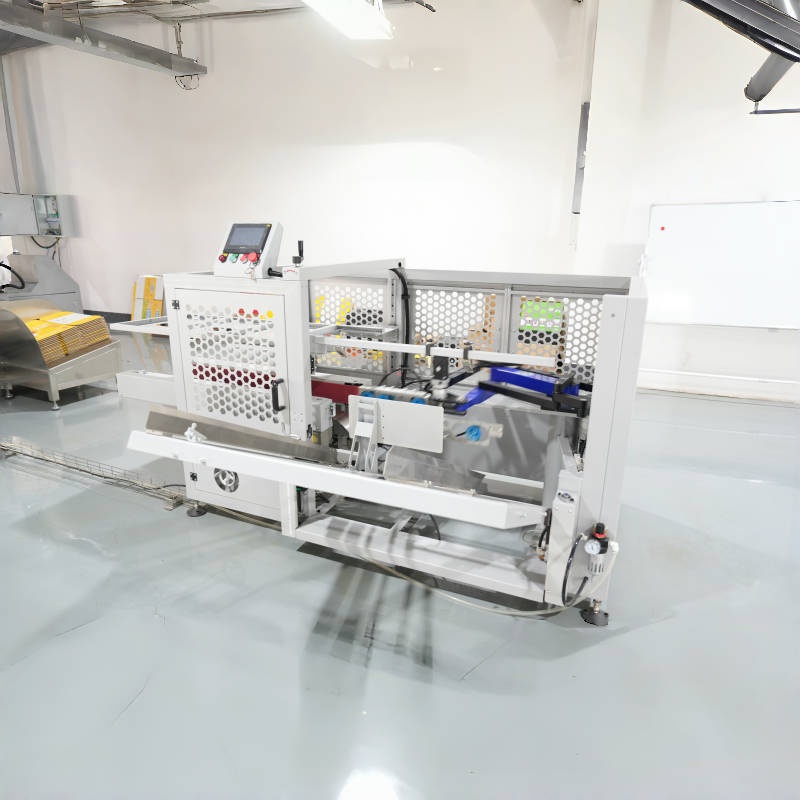
When selecting a box erector robot, consider the following factors:
Match machine speed to your filling line output.
Ensure the system accommodates multiple carton sizes if required.
Choose between tape sealing or hot melt adhesive depending on product weight and logistics needs.
Confirm compatibility with available factory floor space.
Reliable after-sales support ensures long-term stability.
Although initial investment may seem significant, the long-term savings are substantial.
Cost Factor | Manual System | Box Erector Robot |
Labor | High | Low |
Error Correction | Frequent | Rare |
Downtime | More frequent | Reduced |
Throughput | Limited | Increased |
Long-Term ROI | Moderate | Strong |
Most facilities see measurable return within a few years due to increased efficiency and labor savings.
Automation also contributes to sustainability goals:
Reduced carton waste from misfolding
Lower adhesive overuse
Improved energy efficiency
Reduced workplace injury-related disruptions
Precise forming ensures optimal material usage.
As automation advances, future box erector robots will integrate:
AI-driven predictive maintenance
Remote monitoring systems
Real-time production analytics
Adaptive speed control
The packaging industry is moving toward fully intelligent manufacturing ecosystems.
A box erector robot is far more than a simple carton-forming machine—it is a critical component in modern automated packaging lines. By transforming flat cardboard blanks into structurally sound cartons at high speed and precision, it eliminates labor bottlenecks, improves consistency, enhances workplace safety, and increases overall production efficiency.
For manufacturers seeking to modernize their packaging operations, investing in a reliable box erector robot is a strategic decision that supports scalability and long-term competitiveness. At Shandong Unity Robotics Co., Ltd., we focus on designing advanced Case Erector and Case Packer robotic systems tailored to diverse industrial requirements. If you are looking to upgrade your packaging line with dependable automation technology, we welcome you to learn more about our solutions and discuss how we can support your operational goals.
A box erector robot automatically forms flat corrugated blanks into upright, sealed cartons ready for packing.
Yes, many systems are adjustable or programmable to accommodate various box dimensions.
Depending on the model, it can form dozens of cartons per minute, significantly faster than manual methods.
Yes, compact models are available that fit smaller production lines while still improving efficiency and consistency.