
- All
- Product Name
- Product Keyword
- Product Model
- Product Summary
- Product Description
- Multi Field Search
Have you ever wondered how industries achieve lightning-fast precision? The secret lies in Delta robots. With their unique design and unmatched speed, these robots are revolutionizing industries from manufacturing to medicine. In this article, we’ll dive into the powerful uses of Delta robots, exploring how they’re boosting efficiency and transforming production lines.
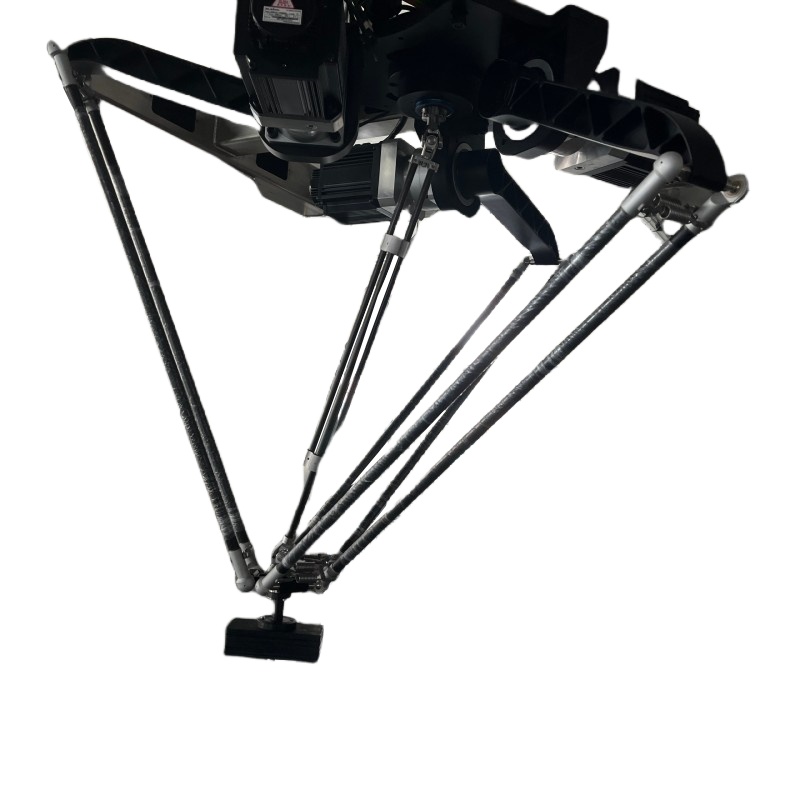
Delta robots are designed with three lightweight arms that are mounted on a fixed base, forming a unique structure that distinguishes them from traditional robotic arms. The key components of Delta robots include the parallel link arms and the end effector. The parallel link arms enable the Delta robot to move quickly and precisely, making them ideal for high-speed tasks. The end effector, which is the part of the robot that interacts with the objects it handles, is custom-designed for specific tasks such as picking, placing, sorting, or packaging items.
Unlike Cartesian robots, which use linear actuators and a rectangular coordinate system, Delta robots are capable of much faster movements, making them ideal for tasks that require high speed and accuracy, such as assembly, picking, and sorting. Similarly, Delta robots offer more precision than SCARA robots, which are often used for more rigid, less flexible tasks. The lightweight structure of Delta robots, combined with their unique mechanical design, allows them to perform tasks with greater speed and accuracy while requiring less space than traditional robots.
Delta robots rely on a parallel kinematic design, which involves the use of multiple interconnected arms that work together to move the end effector. These robots operate with a high level of precision because their design minimizes the potential for mechanical errors. In practice, Delta robots are powered by advanced control systems that integrate machine vision and sensors to accurately detect objects and navigate their movements.
The motion control system within a Delta robot is highly advanced, enabling it to adjust its movements in real-time based on input from its sensors and vision systems. This adaptability allows Delta robots to perform complex tasks without the need for human intervention. Furthermore, Delta robots are often integrated with other systems such as conveyors, packaging machines, and quality inspection stations, creating a seamless automation process that enhances overall productivity.
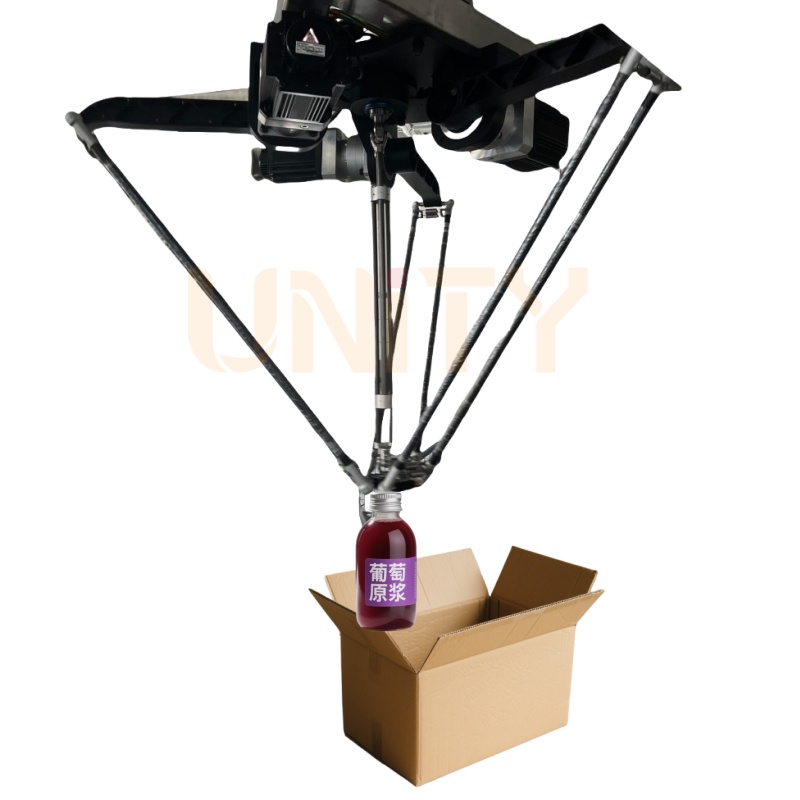
Delta robots are most commonly used for pick-and-place applications, where speed and precision are crucial. Their ability to quickly pick small objects from a conveyor belt or assembly line and place them in packaging, boxes, or containers makes them highly valuable in industries such as food processing, electronics, and pharmaceuticals.
In the food processing industry, for instance, Delta robots are used to pick packaged food items like snacks, fruits, or vegetables and place them in the correct packaging without causing damage or contamination. Similarly, in electronics, these robots are used to pick delicate components and place them in specific locations on assembly lines, ensuring accuracy and reducing human error.
Shandong Unity Robotics Co., Ltd. is at the forefront of providing high-speed and precision Delta robots, ideal for sorting and packing in industries ranging from food processing to electronics and pharmaceuticals. These robots help businesses significantly improve the speed and accuracy of their operations.
Another area where Delta robots excel is in packaging and sorting. Their precision and speed allow them to sort products into boxes or containers, even in fast-paced environments where human workers would struggle to keep up. Delta robots can handle a variety of tasks, such as sorting products based on size, weight, or shape, and packaging them for shipment.
In e-commerce fulfillment centers, Delta robots are used to sort and package products for delivery. They can quickly scan the product, determine its size and packaging requirements, and place it into the appropriate box. Automated warehouses also rely on Delta robots to handle goods, ensuring that items are accurately placed and packed for shipping.
Delta robots are also becoming indispensable in the medical field. Their precision and ability to handle delicate materials make them ideal for tasks in surgeries, laboratories, and research environments. Surgical robots, for example, utilize Delta robots to perform minimally invasive procedures, where precision is critical.
In laboratories, Delta robots are used for handling test tubes, samples, and dispensing substances with extreme accuracy. This reduces the risk of contamination and human error, improving the overall efficiency and safety of laboratory processes.
Delta robots are not just limited to industrial tasks; they also have applications in creative industries and education. For instance, in art installations, Delta robots are used to create complex sculptures or interactive designs that require fast, precise movements. Their flexibility and adaptability make them ideal for tasks in the entertainment and creative sectors.
In educational settings, Delta robots are used to teach students about robotics and automation in a hands-on manner. Their design allows students to interact with the robots, gaining valuable experience in programming, control systems, and automation.
One of the standout features of Delta robots is their high-speed operation. These robots are designed to perform repetitive tasks with minimal downtime, making them ideal for applications that require consistent output over long periods. Their lightweight structure and high-stiffness design allow them to operate at speeds that traditional robots cannot match, making them perfect for time-sensitive tasks.
Delta robots are also known for their precision. The design of the robot ensures that each movement is executed with accuracy, which is essential in tasks like picking small objects or assembling components. The robots can perform tasks with minimal error, improving quality control in manufacturing processes.
Delta robots are highly flexible and adaptable, allowing them to be reprogrammed for different tasks without requiring significant changes to the setup. This makes them ideal for industries where production requirements change frequently or where seasonal demands require different configurations. Delta robots can handle a wide range of materials, from delicate food products to electronic components, which makes them highly versatile.
Delta robots are designed to optimize production cycles, improving the overall efficiency of industrial processes. By automating repetitive tasks, businesses can achieve faster cycle times and higher throughput, which translates into greater production capacity. Delta robots are capable of running continuously without the need for frequent breaks, making them ideal for environments that demand high output.
Feature | Delta Robots | Traditional Robots |
Speed | High-speed, precise movements | Slower, less accurate |
Efficiency | Continuous operation, reduced downtime | Frequent breaks, slower cycles |
Adaptability | Easily reprogrammable for various tasks | Requires extensive reconfiguration |
Precision | High precision in repetitive tasks | Lower precision for complex tasks |
The cost-effectiveness of Delta robots comes from their ability to reduce the need for human labor, particularly for repetitive and hazardous tasks. Over time, businesses can save on labor costs and reduce the risk of human error, leading to significant operational savings. Additionally, Delta robots are known for their low maintenance requirements, which further lowers operational costs in the long term.
Shandong Unity Robotics Co., Ltd. specializes in providing customizable Delta robot solutions to meet the unique needs of different businesses. Whether you're looking for robots to sort, pack, or perform other tasks, Unity Robotics can design a system that optimizes your production line, improves efficiency, and reduces costs.
Feature | Delta Robots | Cartesian Robots |
Speed and Precision | Ideal for high-speed, precise tasks | Slower and more rigid, better for static tasks |
Payload Capacity | Suitable for light-weight items | Handles heavier loads, ideal for larger components |
Space Requirements | Compact design, less space needed | Requires larger spaces due to its linear motion setup |
Delta robots excel in speed and precision, making them perfect for tasks like pick-and-place and sorting, where high throughput is essential. In contrast, Cartesian robots are typically slower and more rigid, often used for tasks that require heavier payloads or larger working areas. Additionally, Delta robots require less space, making them ideal for environments where space is limited.
Feature | Delta Robots | SCARA Robots |
Flexibility | Best for small, high-speed tasks | Better for larger, flexible tasks |
Precision | High precision in repetitive tasks | Suitable for assembly processes where movement is more controlled |
When comparing Delta robots to SCARA robots, Delta robots are ideal for small, fast, and precise tasks, such as handling delicate components in high-speed operations. SCARA robots, on the other hand, are better suited for tasks that require more flexibility, such as assembly processes where movement across a larger area is needed. While both types offer precision, SCARA robots are designed for different applications where flexibility and strength are more important.
The future of Delta robots is bright, with ongoing advancements in AI, machine learning, and collaborative robotics. These technologies will enable Delta robots to make smarter decisions, adapt to new environments, and work more autonomously. As these innovations continue to evolve, Delta robots will be able to take on more complex tasks, expanding their use beyond traditional industrial applications into fields like space exploration and autonomous vehicles.
The integration of collaborative robots (cobots) with Delta robots will further expand their capabilities. Cobots work alongside human operators, improving safety and allowing robots to handle more intricate tasks. As the demand for flexible, adaptive automation solutions grows, Delta robots will continue to evolve, finding new applications in industries like agriculture, logistics, and construction.
Delta robots are transforming industries by enhancing speed, precision, and efficiency. Their unique design and capabilities make them ideal for a wide range of applications, from pick-and-place tasks to medical surgeries. By automating repetitive tasks and reducing human error, Delta robots help businesses streamline operations, increase throughput, and reduce costs. As technology continues to advance, the capabilities of Delta robots will only increase, offering even greater potential for industries seeking to optimize their production lines. Shandong Unity Robotics Co., Ltd. offers advanced Delta robots designed for speed, precision, and cost-effectiveness. By leveraging our innovative solutions, businesses can further optimize their production lines. Visit our Industries page for more information on how our Delta robots can improve your operations. Contact us today for a tailored solution that fits your needs! As a leader in industrial automation, Shandong Unity Robotics Co., Ltd. is revolutionizing the way businesses handle repetitive tasks with high-speed, precision solutions that are both adaptable and cost-effective. Integrating our Delta robots into your operations is a smart investment that can enhance productivity, reduce operational costs, and drive overall efficiency.
A: Delta robots are used for high-speed, precision tasks in industries like food processing, electronics, and pharmaceuticals. Their key applications include pick-and-place, sorting, and packaging.
A: Delta robots increase efficiency by automating repetitive tasks, reducing human error, and working faster than traditional robots, boosting overall productivity.
A: Delta robots are designed with high-speed, lightweight arms that allow for fast and accurate movements, making them perfect for tasks like sorting and assembly.
A: Delta robots are highly effective in food processing, electronics, pharmaceuticals, and e-commerce, where precision and speed are crucial.
A: Delta robots offer faster speeds, greater precision, and a smaller footprint compared to traditional robotic arms, making them more efficient for high-volume tasks.