
- All
- Product Name
- Product Keyword
- Product Model
- Product Summary
- Product Description
- Multi Field Search
Labor costs are rising globally, and modern warehouses are under increasing pressure to improve efficiency while maintaining accuracy and delivery speed. In high-volume distribution centers, one of the most repetitive and labor-intensive tasks is carton forming. Manually erecting boxes may seem simple, but when performed thousands of times per shift, it consumes significant manpower, increases fatigue-related errors, and limits throughput.
This is where a box erector robot becomes a transformative solution. As manufacturers and automation specialists, we have seen firsthand how integrating a box erector robot into warehouse packaging lines can significantly reduce labor costs while improving operational consistency. Rather than replacing human workers entirely, the goal is to reallocate labor toward higher-value tasks while automation handles repetitive, high-frequency operations.
In this article, we will explore how a box erector robot reduces labor costs, improves productivity, enhances safety, and supports scalable warehouse growth.
At first glance, manual carton forming appears inexpensive. However, when analyzed over time, the real costs become clear.
Manual box erection requires:
Dedicated staff per shift
Overtime during peak seasons
Training and supervision
Temporary labor during high demand
Beyond wages, manual processes introduce:
Fatigue-related errors
Inconsistent box sealing
Workplace injuries
Production slowdowns
Factor | Manual Erection | Box Erector Robot |
Labor dependency | High | Low |
Output consistency | Variable | Stable |
Injury risk | Moderate | Low |
Long-term cost | Increasing | Predictable |
Over time, labor-intensive packaging operations become a bottleneck in warehouse performance.
A box erector robot is an automated system designed to:
Pick flat cartons from a magazine
Form the box into shape
Seal the bottom flaps
Deliver the erected carton to the packing line
Unlike simple mechanical erectors, robotic systems provide greater flexibility, higher speed, and precise repeatability.
Component | Function |
Carton magazine | Stores flat cartons |
Robotic arm or forming mechanism | Shapes the carton |
Sealing system | Applies tape or hot melt glue |
Control system | Manages speed and size settings |
Modern box erector robots integrate seamlessly with conveyors, case packers, and palletizers.
The most immediate impact of a box erector robot is reduced labor allocation.
Instead of assigning multiple workers to carton forming:
One operator can supervise multiple automated units
Labor can be reassigned to quality control or logistics coordination
During peak seasons, warehouses often rely on overtime or temporary workers. A box erector robot:
Maintains consistent output regardless of shift length
Reduces overtime premiums
Stabilizes labor budgeting
Operation Type | Workers Required per Shift | Annual Labor Cost Impact |
Manual | 3–5 | High |
Automated | 1 (supervisor) | Significantly reduced |
Over a multi-year period, the savings can outweigh the initial equipment investment.
Labor cost reduction is not just about fewer employees—it’s about doing more with the same resources.
A box erector robot can:
Operate continuously
Maintain consistent cycle times
Reduce stoppages
Manual operations are affected by:
Fatigue
Break schedules
Inconsistent pace
Automation removes variability from the equation.
Manual box forming involves:
Repetitive bending
Wrist twisting
Lifting stacks of cartons
These repetitive motions increase the risk of:
Musculoskeletal injuries
Worker compensation claims
Lost productivity days
A box erector robot eliminates repetitive strain tasks, creating a safer warehouse environment.
Risk Factor | Manual Process | Robotic Process |
Repetitive strain | High | Minimal |
Lifting injuries | Moderate | Low |
Workplace fatigue | Significant | Reduced |
Lower injury rates directly reduce insurance and compensation costs.
In manual carton forming processes, inconsistency is one of the most underestimated cost drivers. Even small deviations in folding angles, flap alignment, or sealing pressure can create downstream problems that multiply across the packaging line. Over time, these inconsistencies translate into measurable financial loss.
Inconsistent box erection often leads to:
Poor sealing that opens during transit
Carton collapse under stacking pressure
Damaged goods caused by structural weakness
Shipping returns due to packaging failure
Each defective carton increases hidden operational expenses, including:
Rework labor to manually fix or replace cartons
Material waste from discarded boxes and sealing tape
Customer dissatisfaction resulting from damaged deliveries
A box erector robot eliminates these variables by standardizing the forming and sealing process. Every carton is erected with identical geometry, ensuring proper 90-degree angles and uniform structural integrity. Sealing systems apply consistent pressure and adhesive distribution, preventing under-sealing or overuse of tape.
Key advantages include:
Uniform carton geometry across every cycle
Consistent sealing pressure and adhesive application
Accurate alignment before handoff to case packers
By reducing packaging variability at the source, warehouses minimize downstream disruptions. The result is fewer stoppages, less rework, and improved shipping reliability—directly impacting profitability and brand reputation.
Warehouse growth introduces operational complexity. As order volumes increase, manual carton forming requires:
Hiring additional staff
Expanding shift hours
Managing workforce variability and turnover
These adjustments introduce unpredictability into cost planning and operational performance. Labor markets fluctuate, wage inflation continues, and training new employees consumes time and resources.
A box erector robot, however, scales with demand more efficiently. Through programmable speed adjustments and flexible carton size configurations, one automated unit can adapt to changing production requirements without requiring proportional increases in manpower.
Scalability advantages include:
Speed adjustment to match production peaks
Multi-size carton handling without extensive reconfiguration
Modular expansion by adding additional robotic units
Instead of recruiting and training new employees during high-demand seasons, warehouses can increase operational capacity through equipment optimization. This reduces long-term labor risk and provides predictable cost planning.
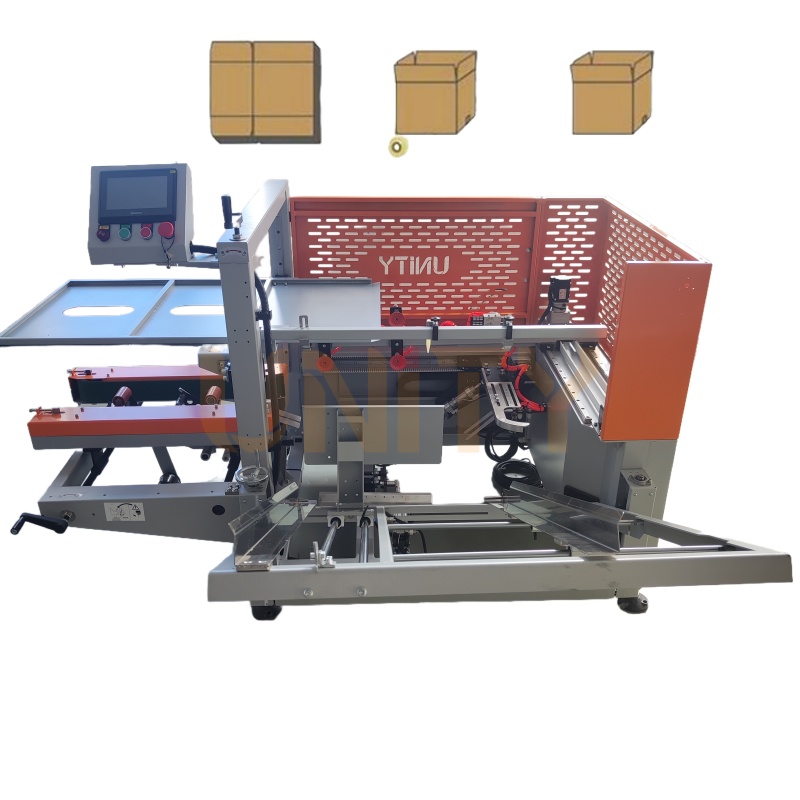
The adaptability of a box erector robot extends across multiple sectors, making it a versatile investment.
Industries benefiting from robotic carton forming include:
E-commerce fulfillment, where speed and accuracy are critical
Food & beverage packaging, requiring hygiene and high throughput
Consumer goods distribution, demanding consistent carton integrity
Pharmaceutical logistics, where precision and compliance are essential
Each industry has unique packaging requirements, yet the fundamental need for consistent carton formation remains constant. Robotic systems can be configured to accommodate various carton sizes, materials, and sealing methods, ensuring cross-sector applicability.
This flexibility strengthens ROI by allowing equipment redeployment if production lines shift or product mixes evolve.
When assessing automation investments, focusing solely on upfront cost overlooks long-term operational impact. Warehouses should evaluate total cost of ownership across a multi-year horizon.
Key evaluation criteria include:
Labor savings over 3–5 years
Reduced injury claims and insurance costs
Lower packaging waste
Increased throughput and order fulfillment capacity
Reduced supervision requirements
Cost Factor | Manual | Box Erector Robot |
Wage inflation impact | High | Low |
Injury-related costs | Ongoing | Reduced |
Output variability | Significant | Controlled |
Predictable budgeting | Limited | Strong |
Automation converts fluctuating labor expenses into stable capital investment. Instead of being exposed to unpredictable wage increases and staffing shortages, warehouses gain cost control and operational reliability.
A modern box erector robot does not operate in isolation. It integrates seamlessly with:
Conveyor systems
Case packers
Vision inspection units
Warehouse management systems (WMS)
This connectivity enhances:
Workflow transparency across packaging lines
Real-time monitoring of carton output
Performance analytics for continuous improvement
Digital integration allows supervisors to track productivity, detect bottlenecks, and adjust settings remotely. This reduces hidden inefficiencies and improves overall operational coordination.
Automation also supports sustainability goals—an increasingly important factor in modern supply chains.
A box erector robot:
Minimizes carton waste by ensuring precise forming
Optimizes tape or glue usage through controlled sealing
Reduces energy waste associated with idle labor and rework
By improving material efficiency and reducing defects, robotic carton forming lowers environmental impact while strengthening cost structure.
In today’s competitive logistics environment, reducing labor costs without sacrificing quality or speed is a constant challenge. A box erector robot addresses this challenge by automating one of the most repetitive tasks in warehouse operations. By minimizing manual labor, reducing workplace injuries, improving packaging consistency, and increasing throughput, robotic carton forming delivers both immediate savings and long-term operational stability.
As automation specialists, we design box erector robot solutions that align with real-world warehouse needs—balancing speed, flexibility, and cost control. If you are evaluating how to optimize your packaging process and reduce labor expenses in your facility, we invite you to learn more about our advanced systems.
For detailed technical information and customized solutions, contact Shandong Unity Robotics Co., Ltd. to explore how a box erector robot can support your warehouse efficiency goals.
1. How much labor can a box erector robot replace?
A box erector robot can typically replace multiple manual carton-forming positions per shift, depending on throughput requirements.
2. Is a box erector robot suitable for small warehouses?
Yes. Compact models are available for moderate production volumes and can scale as operations grow.
3. Can a box erector robot handle multiple carton sizes?
Modern systems are adjustable and programmable to accommodate different carton dimensions with minimal changeover time.
4. How quickly can a warehouse see ROI from a box erector robot?
Return on investment depends on labor costs and production volume, but many facilities see measurable savings within 1–3 years.