
- All
- Product Name
- Product Keyword
- Product Model
- Product Summary
- Product Description
- Multi Field Search
Have you ever wondered how cobot palletizers are transforming industries? These innovative robots are working alongside humans to enhance productivity and reduce costs. But which cobot palletizers are setting the standard in 2026?
In this article, we’ll dive into the top 5 cobot palletizers of the year. You’ll learn about their key features, benefits, and how they’re driving efficiency and safety in modern manufacturin
Cobot palletizers are automated systems that assist with the task of stacking products onto pallets. Unlike traditional robotic palletizers, which are typically housed in isolated spaces behind safety barriers, cobots are specifically designed to work safely alongside human operators. These robots are equipped with advanced sensors, vision systems, and grippers that enable them to handle a wide variety of products, from cartons to bags to boxes, with high precision.
Cobots are also highly adaptable. They can be easily reprogrammed or adjusted to handle different types of products, packaging variations, and pallet configurations. This flexibility makes them ideal for industries that require frequent changes in production schedules, product sizes, and packaging styles, such as e-commerce and food processing. For instance, cobots can be reprogrammed to adjust to new palletizing patterns or changes in the size and shape of products, which would typically require additional retooling or adjustments in a traditional automated system.
The function of cobot palletizers is relatively simple but highly effective. These robots use robotic arms equipped with specialized grippers to pick up products from conveyors or other sources and place them onto pallets. The cobots’ vision systems and AI-driven algorithms allow them to identify product orientation, adjust to irregular shapes, and stack products with consistency and accuracy, ensuring that each pallet is loaded in an optimal configuration. This automation reduces the need for human intervention in repetitive and physically demanding tasks, while also reducing the risk of errors and accidents.
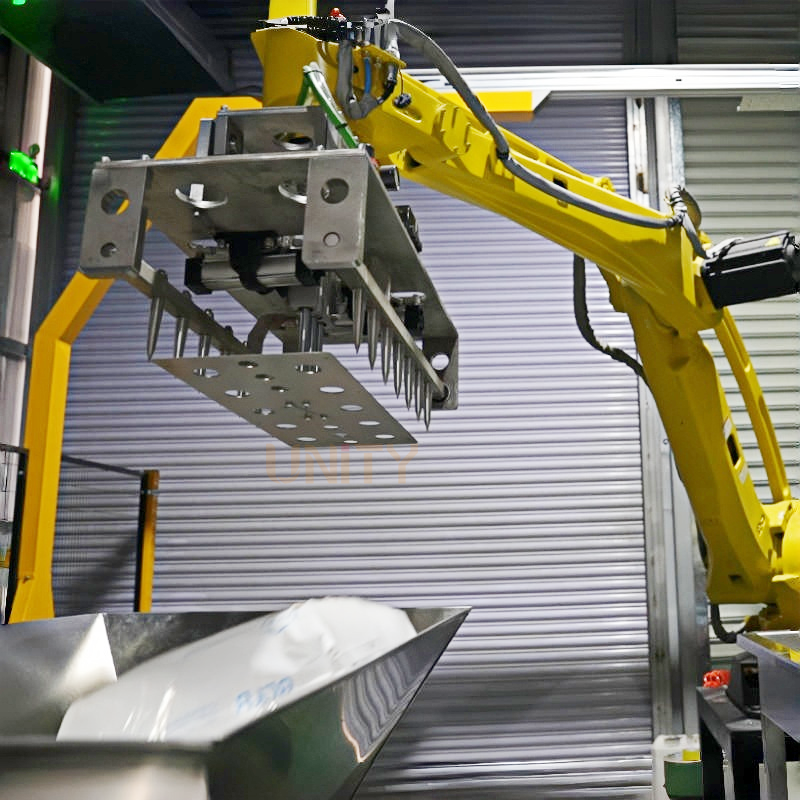
● Ease of Integration: Cobots are designed to work alongside existing production lines, making it easier to implement automation without the need for extensive modifications or downtime. Their flexibility allows businesses to gradually introduce automation and scale up as needed.
● Human-Robot Collaboration: Cobots can work in close proximity to human workers, enhancing productivity without replacing the workforce. These robots can take over the repetitive, manual tasks of palletizing, while allowing workers to focus on higher-value activities such as quality control, machine maintenance, and process optimization.
● Adaptability: Cobots are highly versatile and can be easily reprogrammed to handle different products, packaging types, and palletizing configurations. This adaptability ensures that cobots can be utilized in various industries with varying production needs.
The demand for cobot palletizers has surged in recent years, driven by the increasing need for faster production cycles, higher throughput, and improved efficiency. In industries such as e-commerce, logistics, and manufacturing, where there is a constant push to meet growing demand while maintaining product quality, cobots offer a reliable and cost-effective solution. Their ability to work collaboratively with human workers allows for the seamless integration of automated systems into existing workflows, making them a popular choice for businesses looking to improve their material handling processes.
In addition, cobots help businesses reduce the risk of workplace injuries, particularly in tasks that involve heavy lifting or repetitive motion. By automating these processes, cobots not only improve worker safety but also help reduce costs associated with workplace injuries, absenteeism, and insurance claims.
Cobot palletizers are known for their ability to improve productivity by streamlining the palletizing process. Unlike manual labor, which can be prone to fatigue, cobots can operate continuously without breaks, ensuring that production lines remain steady and efficient. This constant output is particularly beneficial in high-demand environments, such as e-commerce fulfillment centers, where fast and accurate order processing is crucial. Additionally, cobots help reduce bottlenecks in the palletizing process, allowing businesses to maintain consistent throughput even during peak periods.
While traditional robotic palletizing systems often come with high upfront costs, cobots offer a more affordable alternative. Cobots are typically less expensive to purchase, install, and maintain, making them accessible to small and medium-sized enterprises (SMEs) that may not have the capital to invest in large-scale automation. Moreover, cobots can deliver a high return on investment (ROI) due to their ability to work around the clock, reduce manual labor costs, and improve operational efficiency.
UNITY’s robotic palletizing solutions, for example, are designed to integrate seamlessly into existing production lines, offering businesses a cost-effective approach to automation. By tailoring systems to meet the specific needs of each operation, UNITY ensures that businesses maximize their investment while minimizing unnecessary costs and downtime.
One of the primary advantages of cobot palletizers is their focus on worker safety. Cobots are equipped with safety sensors and algorithms that allow them to detect the presence of humans and adjust their behavior accordingly. If a human enters the robot's workspace, the cobot will slow down or stop to prevent accidents, creating a safer work environment for all employees. This is particularly important in industries where heavy lifting or repetitive motions are common, as these tasks are associated with an increased risk of workplace injuries.
By automating these tasks, cobots reduce the physical strain on workers, allowing them to focus on higher-value activities that require human decision-making and problem-solving skills. As a result, businesses benefit from increased productivity and a safer work environment, with fewer incidents and disruptions.
Cobots are highly flexible, making them ideal for businesses that experience fluctuations in demand or need to adjust their production lines frequently. These robots can be easily reprogrammed to handle different products, packaging types, and palletizing patterns, ensuring that businesses can quickly adapt to changing market conditions. This adaptability is especially important for industries like food processing, where production schedules and product types can change regularly.
Moreover, cobots are scalable, meaning that businesses can add additional robots as their production needs grow. This scalability allows companies to gradually expand their automation capabilities, ensuring that they can keep pace with increasing demand without over-investing in technology upfront.
The world of cobot palletizers is growing, with several innovative models entering the market in 2026. Below is a summary of five of the best cobot palletizers, highlighting their key features and benefits:
Cobot Palletizer | Payload Capacity | Reach | Key Features | Applications | Benefits |
Robotiq Palletizing Cobot | Up to 10 kg | 1300 mm | Advanced sensors, gripper compatibility, collision detection | Logistics, e-commerce, high-volume palletizing | Boosts efficiency by increasing palletizing speeds, improving consistency, reducing human error |
UR10e by Universal Robots | 10 kg | 1300 mm | Easy-to-use programming interface, modular design | Automotive, electronics, food & beverage industries | Ideal for flexible industries with varying product sizes, reduces the learning curve for operators |
KUKA LBR iiwa | Up to 14 kg | N/A | Safety sensors, dynamic motion capabilities, high precision | Automotive, packaging, consumer goods industries | Ideal for both heavy-duty and delicate product handling, enables safe human-robot collaboration |
Fanuc CR-35iA | 35 kg | N/A | Precision, shock-absorbing technology, collision detection | Heavy manufacturing, food packaging, logistics | Handles large, heavy products with high precision, reduces manual labor and increases operational efficiency |
AUBO Robotics AUBO-PAL | Up to 5 kg | N/A | Advanced vision systems, sensors for precision placement | Food processing, consumer goods, packaging | Ideal for industries with frequent changes in product designs, ensures precise placement even for irregular shapes |
These cobot palletizers offer excellent versatility, performance, and adaptability, helping businesses optimize their palletizing processes, reduce labor costs, and increase overall efficiency.
Cobot palletizers are capable of working continuously without the need for breaks, significantly boosting operational speed. Their ability to maintain consistent output throughout the production day ensures that businesses can meet high-demand production goals and maintain steady throughput. This constant and reliable operation is critical in industries that rely on fast-paced workflows, such as e-commerce fulfillment centers and food processing facilities.
One of the most valuable features of cobots is their adaptability. Unlike traditional robotic systems, which often require extensive reprogramming or retooling for each new task, cobots can be easily reprogrammed to handle different products, packaging variations, or palletizing patterns. This flexibility allows businesses to quickly respond to changes in customer demands or production schedules, ensuring they can stay competitive in a rapidly evolving market.
Cobots allow businesses to offload repetitive and physically demanding tasks, such as stacking products onto pallets, to automated systems. This reduces the strain on workers, freeing them to focus on more complex and value-added activities. Furthermore, by taking over these tasks, cobots help reduce the risk of workplace injuries caused by repetitive motion and heavy lifting.
Factor | Considerations |
Payload Capacity | Choose a cobot that can handle the weight of your products |
Integration | Ensure the cobot can integrate easily into your existing system |
Ease of Programming | Opt for a user-friendly interface for quick reprogramming |
Safety Features | Look for collision detection and safety sensors |
Payload and Reach:When selecting a cobot palletizer, one of the most important factors to consider is the payload capacity. The cobot must be able to handle the weight and size of the products being palletized without overloading the system or causing damage. Additionally, the cobot’s reach should be sufficient to cover the entire area needed to pick up products from the conveyor and stack them onto pallets.
Compatibility with Existing Systems:Before investing in a cobot palletizer, businesses must ensure that the robot is compatible with their existing production lines and equipment. Integration with other systems, such as conveyors and vision systems, is essential for a smooth transition to automation. Choosing a cobot that can easily integrate into existing workflows will minimize downtime and ensure that the system operates efficiently from day one.
Ease of Programming and Reprogramming:Cobots are designed to be flexible, and one of their key benefits is the ability to be quickly reprogrammed to handle different tasks or product types. It is essential to choose a cobot that offers an intuitive, user-friendly programming interface that allows operators to easily adjust the robot’s behavior without requiring specialized knowledge. This ease of use ensures that businesses can quickly adapt to changes in production schedules or product designs.
Safety Features:Safety should always be a top priority when selecting a cobot palletizer. Ensure that the cobot is equipped with necessary safety features, such as collision detection sensors, force sensors, and emergency stop functions, to protect human workers from accidents. Cobots with these features can safely operate in close proximity to workers, reducing the risk of injuries while maintaining high levels of productivity.
Cobot palletizers are transforming the palletizing process by improving speed, flexibility, and safety. The top 5 models of 2026—Robotiq, UR10e, KUKA LBR iiwa, Fanuc CR-35iA, and AUBO-PAL—boost productivity while reducing costs. Each model offers unique features for different industries, making them ideal for streamlining material handling.
Investing in cobot palletizers is a smart choice for businesses aiming to improve efficiency, reduce labor costs, and enhance safety. Companies like UNITY provide customized solutions that ensure seamless integration and maximize ROI.
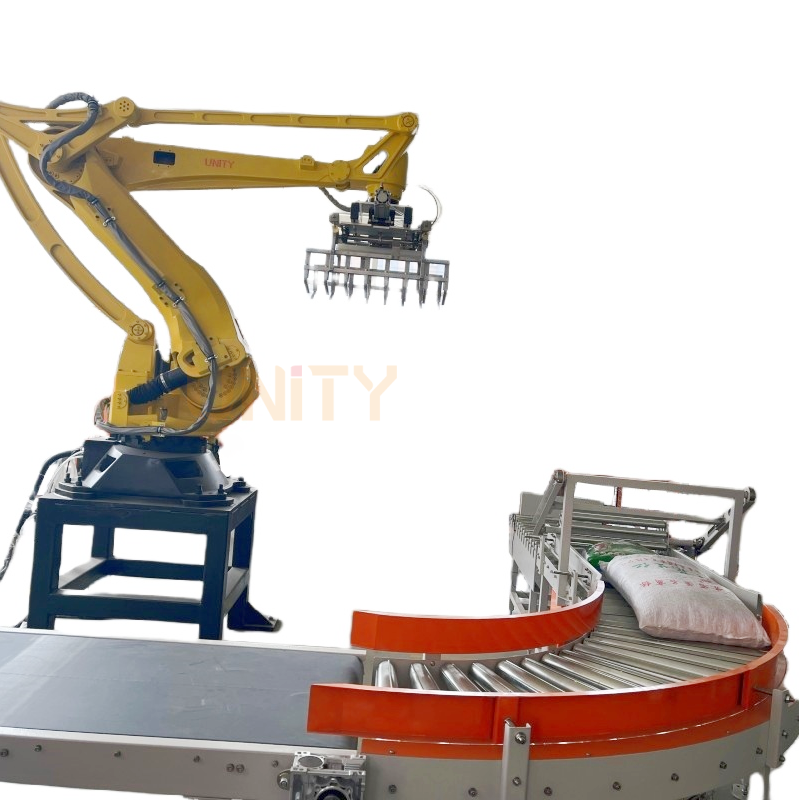
A: Cobot palletizers are collaborative robots designed to automate the process of stacking products onto pallets. Unlike traditional robots, they work safely alongside humans, improving efficiency and reducing labor costs.
A: Cobot palletizers increase productivity by automating repetitive palletizing tasks, allowing workers to focus on more complex activities. They also improve safety by reducing the risk of injury from manual lifting and handling.
A: Businesses should invest in cobot palletizers to streamline operations, reduce human error, and lower labor costs. They also offer flexibility, as they can adapt to varying production needs and product types.
A: The cost of cobot palletizers varies based on the model and features. Generally, they are more affordable than traditional industrial robots, offering a cost-effective automation solution for businesses.
A: The benefits of cobot palletizers include increased efficiency, improved safety, reduced labor costs, and flexibility. They help businesses meet production demands while maintaining consistent quality and speed.
A: Cobot palletizers are more flexible and easier to integrate into existing workflows compared to traditional robots. They work collaboratively with humans, while traditional robots often require dedicated spaces and safety barriers.